|
|
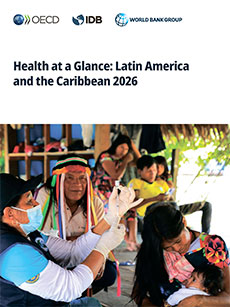
HEALTH AT A GLANCE: LATIN AMERICA
AND THE CARIBBEAN 2026
Paris, OECD Publishing, 2026, 186 pages
|
https://www.oecd.org/content/dam/oecd/en/publications/reports/2026/09/health-at-a-glance-latin-america-and-the-caribbean-2026_19748f23/445b3259-en.pdf
|

Ожидаемая продолжительность жизни при рождении,
по полу, 2010 и 2024 годы (или последний год) (стр. 71)

Коэффициент младенческой смертности, 2010 и 2021-2024
годы (стр. 73)

Распространенность контрацепции - любой современный
метод (среди женщин в возрасте 15-49 лет),
2025 год (стр. 101)

Общее потребление алкоголя на душу населения (15+)
(в литрах чистого алкоголя), по видам напитков,
2022 год (стр. 115)

Коэффициент смертности от болезни Альцгеймера
и других видов деменции на 100 000 населения,
2014 и 2024 годы (стр. 179)
|
Третье издание серии "Health at a glance: Latin
America and the Caribbean", подготовленное совместно ОЭСР,
Межамериканским банком развития и Всемирным банком, представляет
собой набор ключевых показателей состояния здоровья, факторов, определяющих
здоровье, данных о здоровье и инфраструктуры системы здравоохранения,
расходов и финансирования здравоохранения, качества медицинской
помощи, кадрового потенциала здравоохранения и старения населения
в 33 странах Латинской Америки и Карибского бассейна. Каждый из
показателей представлен в удобном для пользователя формате и включает
диаграммы, иллюстрирующие различия между странами и во времени,
краткие описательные анализы, выделяющие основные выводы, полученные
на основе данных, и методологические блоки, определяющие показатели
и обсуждающие ограничения в сопоставимости данных. Данное издание
также включает две тематические главы, посвященные вопросам, имеющим
особое значение для региона: качество медицинской помощи и неравенство
в здравоохранении и доступе к медицинской помощи в Латинской Америке
и Карибском бассейне.
Table of contents
Foreword
Reader's guide
Executive summary
1 Quality of care in Latin America and the Caribbean
Introduction
Quality of care in Latin America and the Caribbean measured through
internationally comparable indicators
Policy and institutional quality of care landscape
Policies, legal and regulatory frameworks, and key organisations
promoting quality of care
Strategic planning of health workforce as a crucial step for assuring
professional quality
Certification, recertification and continuous professional development
at the core of countries' regulatory approach for quality assurance
in the health workforce
Accreditation and quality assurance of health services
Ensuring safety and quality of technologies
Quality indicators, national audit studies and practice guidelines
Financial incentives to increase healthcare quality
Patient safety and medical malpractice
People-centred and integrated care
Concluding remarks and actionable recommendations for the Region
References
Notes
2 Inequalities in health and healthcare in Latin America
and the Caribbean
Introduction
Stylised facts on Health Inequalities in LAC
How LAC countries respond to inequities: Insights from the 2025
equity survey
Concluding remarks and actionable priorities
Actionable priorities for the region
References
3 Health status
Life expectancy at birth
Infant and neonatal mortality
Under age 5 mortality
Adolescent mortality
Mortality from all causes
Mortality from cardiovascular diseases
Mortality from cancer
Mortality from injuries
Maternal mortality
Mental health
Tuberculosis
HIV/AIDS
Mosquito borne diseases
Diabetes
4 Determinants of health
Family planning
Child malnutrition
Adolescent health
Overweight and obese adults
Diet and nutrition
Water and sanitation
Tobacco
Alcohol and drug use
Road safety
Environmental and climate risks
5 Health data and health system infrastructure
Health data availability
Health data use and capacities
Medical technologies: Radiotherapy equipment
Hospital care
Pregnancy and birth
Child healthcare
6 Health expenditure and financing
Health expenditure per capita and in relation to GDP
Financing of healthcare from government and compulsory health
insurance schemes
Financing of healthcare from households' out-of-pocket payments,
voluntary payment schemes and external resources
Financial protection
7 Quality of care
Avoidable mortality (preventable and treatable)
Childhood vaccination programmes
Avoidable hospital admissions
In-hospital mortality following acute myocardial infarction and
stroke
Cancer care
Patient safety and safe prescribing
8 Health workforce
Doctors
Nurses and midwifes
Dentists, pharmacists, and physiotherapists
Community health workers and environmental and occupational health
Graduates
Stock of migrant doctors and nurses to OECD countries
9 Ageing
Demographic trends
Life expectancy and healthy life expectancy at age 60
Drivers of long-term care needs and system response
Paid and unpaid caregivers
Caregiver training and time burden
|



